Supplementary memorandum submitted by
the Learning and Skills Council
Question 68 (Mr Richard Bacon): Evidence of the
impact of skills and qualifications on employment and progression
Impact on employment
— Less than 50% of those with no qualifications
are in employment compared with 75% of those with a level 2. The
unemployment rate (ie those seeking work) is 7.6% for men with
no qualifications compared to 5% for those with level 2 qualifications.
— Higher literacy and numeracy skills
improve the chances of being in work, for example those with level
1 literacy have a 6% higher chance of being in work compared to
those with entry level 3, also level 1 numeracy is associated
with a minimum of 2-3% higher probability of being in work.
THOSE WITH QUALIFICATIONS ARE MORE LIKELY
TO BE IN EMPLOYMENT

Impact on earnings
— Employees with better basic skills
tend to earn more, for example individuals with entry level 3
literacy earn 14% more than those with literacy competency at
entry level 2 or below; entry level 3 in numeracy generates up
to 13% higher earnings compared to those with lower levels of
numeracy.
ONCE IN EMPLOYMENT THEY WILL, ON AVERAGE,
EARN MORE THAT THOSE WITH LOWER QUALIFICATION LEVELS

Impact on further training and progression in work
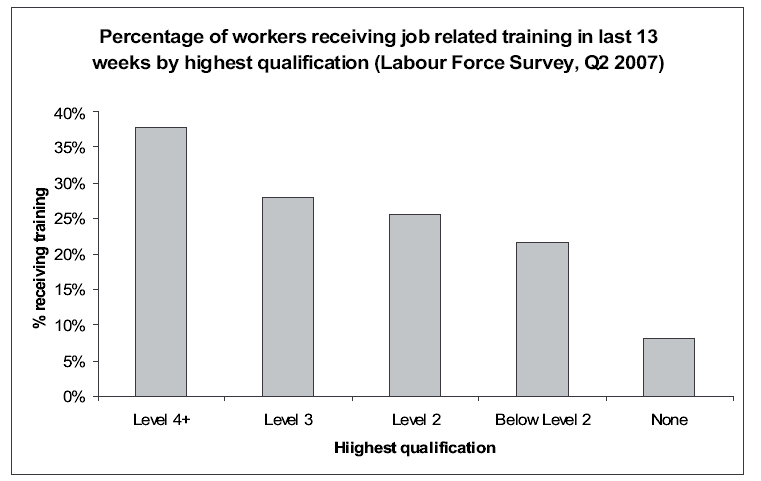
— Once in employment, those without
qualifications are the least likely to be trained, for example,
those with level 2 are three times as likely to have received
training in the past month as those with no qualifications. A
longer term survey found that 70% of unqualified employees had
not received training in the last five years. Without government
interventions like Train to Gain, the evidence shows that most
low skilled employees are unlikely to be offered training to develop
their skills, they will tend to remain in low skilled, low paid
jobs that will form a shrinking part of the UK labour market.
ONCE IN WORK, THOSE WITH QUALIFICATIONS ARE
FAR MORE LIKELY TO RECEIVE FURTHER TRAINING
— Jenkins (2004) found that attainment
of Level 2 vocational qualifications for unqualified school leavers
raises the probability of individuals moving up the occupational
hierarchy by 1.4 percentage points. Given that on average only
4% of the overall sample report such a movement up the occupational
hierarchy, this represents a substantial effect for those that
do move.
|


